Wig caps play a crucial role in how a wig looks and feels, and choosing the right type can enhance your overall appearance. Wig caps come in various forms, designed for different purposes, which makes it essential to understand the types, their benefits, and how they affect wig wearability. In this article, we’ll explore different types of wig caps, their pros and cons, and how to choose the one that best suits your needs.
Wig caps serve as the foundation of wigs. They come in two main types:
Wig Cap Construction: This refers to the base that holds the wig hair. It determines how the wig sits on your head, how natural it looks, and the level of comfort it offers.
Wig Caps for Underneath Wigs: These stretchy caps are worn under the wig to keep natural hair flat and secure, ensuring a smoother and more natural look.
This article will focus on the first type, the wig cap construction, providing insights into the different kinds of wig bases and how they can affect your wig-wearing experience.
Lace Front Wigs
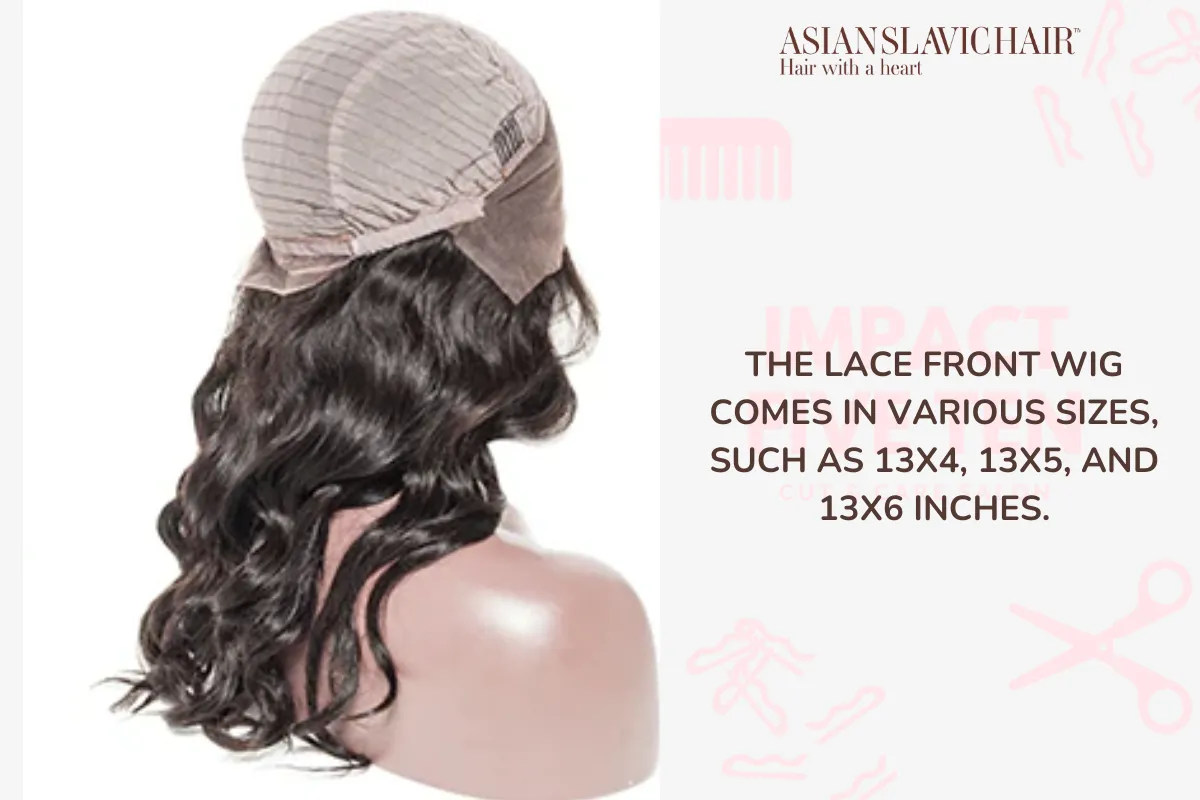
One of the most popular types of wig caps is the lace front wig. It features a lace piece at the front of the wig, which allows for a natural hairline appearance. The lace front wig comes in various sizes, such as 13×4, 13×5, and 13×6 inches, offering options depending on how much lace you prefer.
The lace front wig comes in various sizes, such as 13×4, 13×5, and 13×6 inches.
Pros:
Natural Appearance: Lace front wigs are well-known for their realistic look, blending seamlessly with your natural hairline.
Versatility: You can part lace front wigs in multiple ways, allowing for different styling options such as middle or side parts and even half-up, half-down styles.
Breathability: Lace front wigs allow for airflow around the hairline, making them more comfortable for extended wear.
DIY Maintenance: Many people can install and maintain lace front wigs without professional assistance, reducing costs and improving convenience.
Cons:
Hairline Damage: The use of adhesives, such as wig glue, can damage your natural hairline over time.
Quality Variance: Lower-quality lace fronts may not look as natural or be as durable, though choosing high-quality options with features like Clear Lace and Clean Hairline technology can mitigate these issues.
Closure Wigs
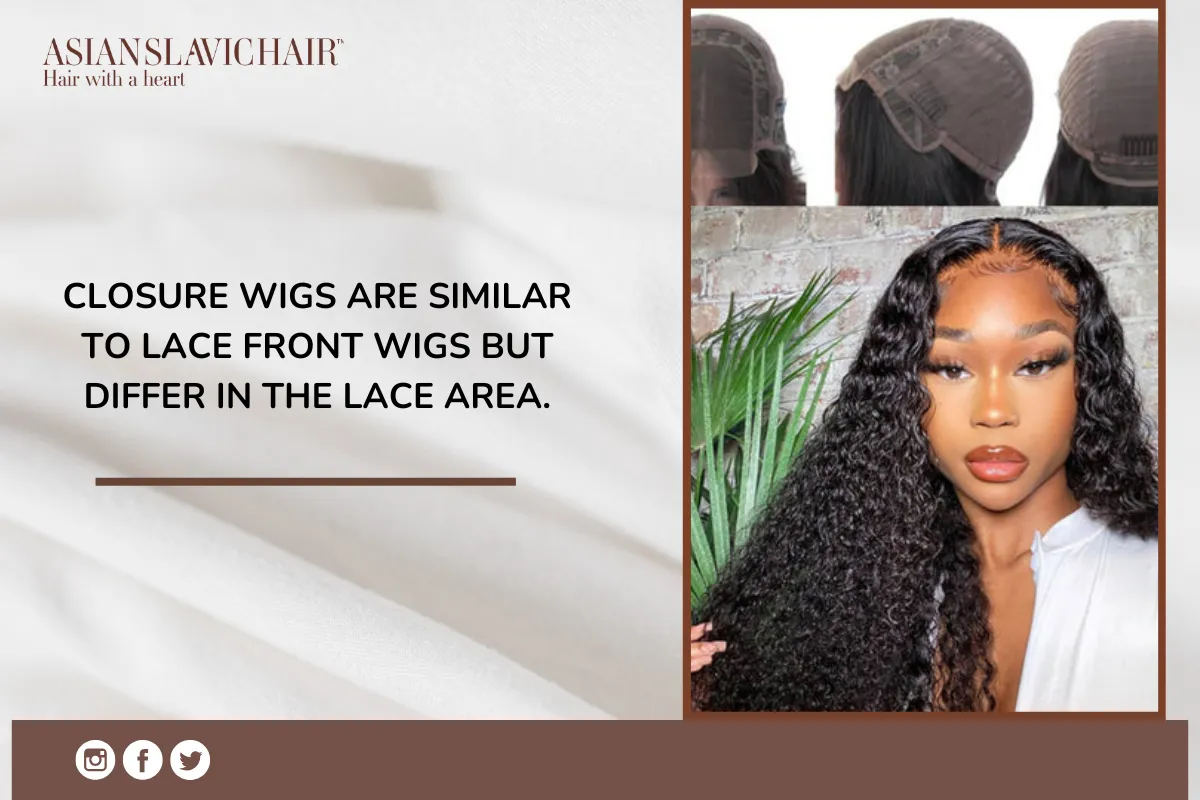
Closure wigs are similar to lace front wigs but differ in the lace area. Closure wigs typically have lace only in a small square or rectangular section at the front, usually measuring 4×4 or 5×5 inches.
Closure wigs are similar to lace front wigs but differ in the lace area.
Pros:
Easy Installation: Closure wigs require less adhesive than lace fronts, making them easier to install.
Affordability: These wigs are often more budget-friendly compared to lace front wigs.
Lower Maintenance: Due to their smaller lace area, closure wigs are less demanding to maintain.
Cons:
Limited Styling: Closure wigs offer fewer styling options, restricting how you can part your hair. You also cannot pull the hair back without exposing wefts.
Full Lace Wigs
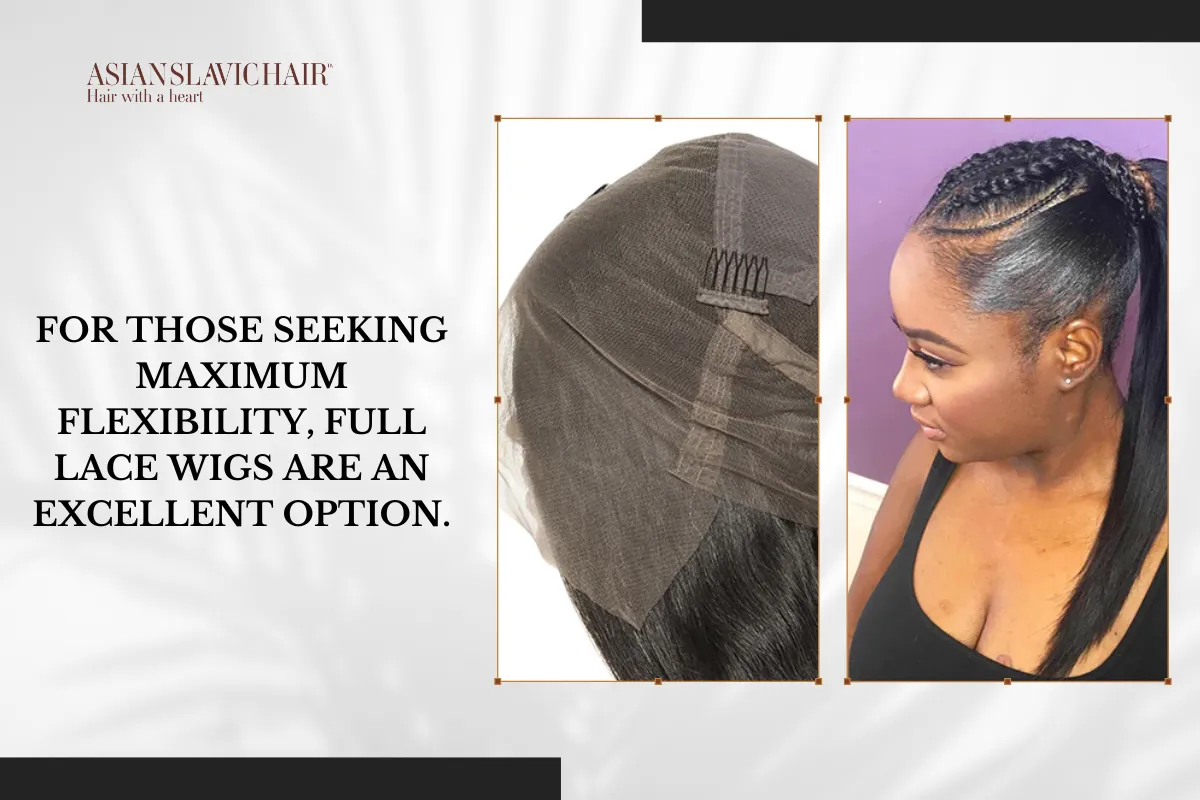
For those seeking maximum flexibility, full lace wigs are an excellent option. These wigs feature lace covering the entire cap, allowing for 360-degree styling. Whether you want to part your hair in any direction or pull it up into a high ponytail, full lace wigs offer complete freedom.
For those seeking maximum flexibility, full lace wigs are an excellent option.
Pros:
Ultimate Styling Versatility: Full lace wigs allow for a wide range of styles, including braids, updos, and ponytails.
Natural Look: These wigs lay flat on the scalp, mimicking the appearance of natural hair growth from every angle.
Comfort: Full lace wigs are breathable, making them more comfortable for long-term wear.
Cons:
Costly: Full lace wigs are among the most expensive options on the market, reflecting their premium quality and flexibility.
Fragile: The delicate nature of lace makes full lace wigs more susceptible to damage, which may require more experience to handle properly.
360 Lace Wigs
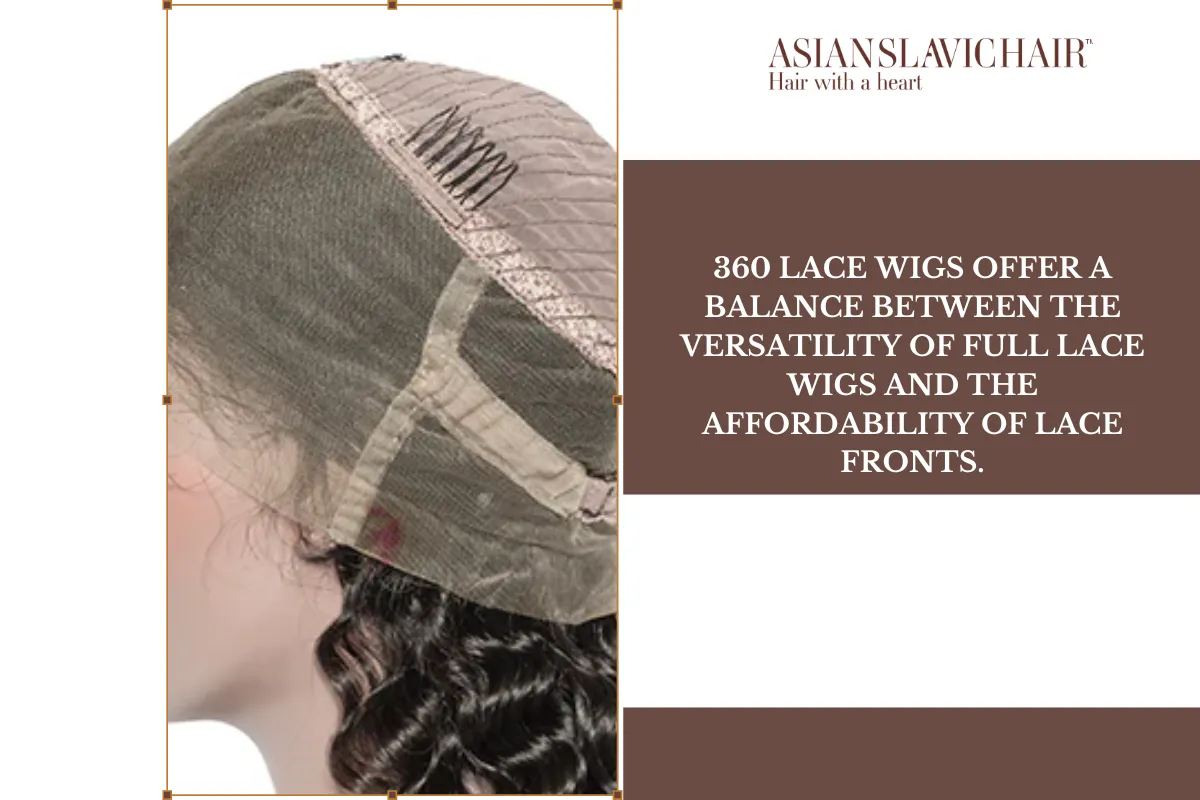
360 lace wigs feature lace around the entire perimeter of the cap, offering a balance between the versatility of full lace wigs and the affordability of lace fronts.
360 lace wigs offer a balance between the versatility of full lace wigs and the affordability of lace fronts.
Pros:
Styling Options: With lace all around, you can wear 360 lace wigs in high ponytails, low buns, and updos without worrying about visible wefts.
Comfort: The lace construction makes these wigs breathable and comfortable for everyday wear.
Cons:
Price: These wigs are more expensive than lace fronts but generally more affordable than full lace wigs.
Headband Wigs
For those who prefer a simple and quick option, headband wigs are ideal. These wigs have a built-in headband and do not feature any lace. They are perfect for casual outings or days when you need a wig in a hurry.
Pros:
Affordability: Headband wigs are among the most budget-friendly options.
Ease of Use: These wigs are incredibly easy to put on and remove, making them great for beginners.
Convenience: Headband wigs are perfect for quick styling when you don’t have time for more complex wig installations.
Cons:
Limited Styling: You cannot part a headband wig or style it in many different ways.
Comfort Issues: Headband wigs can become uncomfortable during hot weather or extended wear.
T-Part Wigs
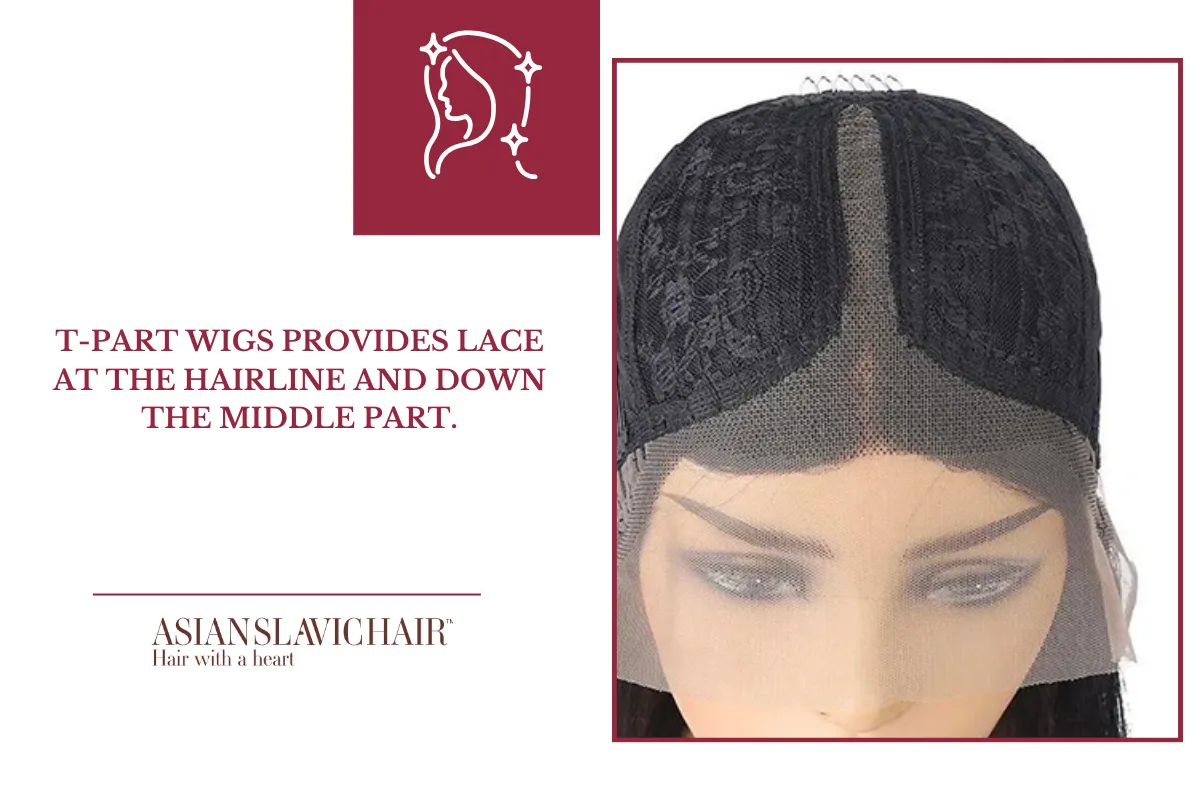
T-Part wigs get their name from the lace’s T-shape in the front, providing lace at the hairline and down the middle part. This style offers a more affordable alternative to lace fronts while maintaining a natural look.
T-Part wigs provides lace at the hairline and down the middle part.
Pros:
Natural Hairline: The lace around the front allows for a natural-looking hairline.
Budget-Friendly: T-Part wigs are more affordable than lace front or full lace wigs.
Ready-to-Wear: T-Part wigs often come pre-plucked, which reduces the time needed for preparation.
Cons:
Styling Restrictions: T-Part wigs are limited in how you can style them, with no option to change the part or wear your hair up.
U-Part Wigs
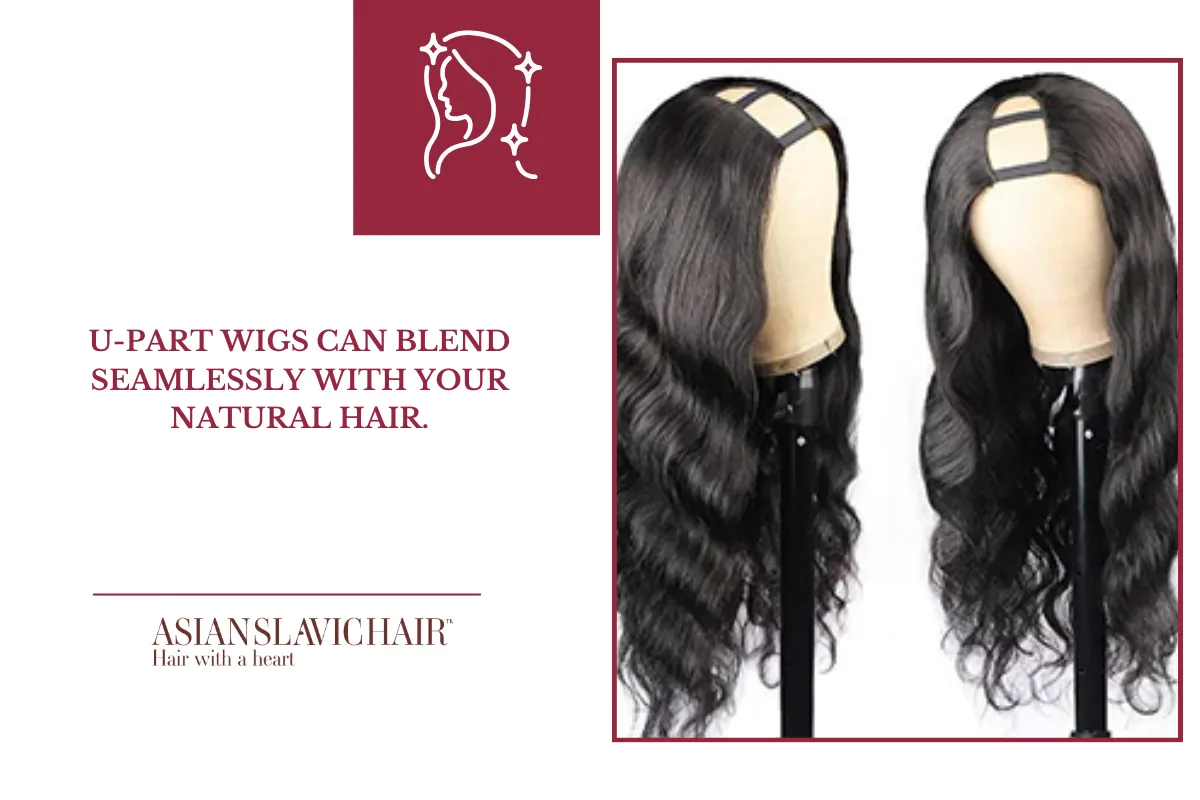
U-Part wigs feature a U-shaped opening at the front, allowing you to leave out some of your natural hair for a more blended look.
U-Part wigs can blend seamlessly with your natural hair.
Pros:
Natural Appearance: With some of your own hair exposed, U-Part wigs can blend seamlessly with your natural hair.
Less Damage: These wigs are a great alternative to traditional sew-ins, reducing the risk of hair damage.
Cost-Effective: U-Part wigs are more affordable than other lace options.
Cons:
Risk of Hair Damage: Leaving out your natural hair requires consistent styling, which can lead to heat damage or breakage.
Weft Wigs
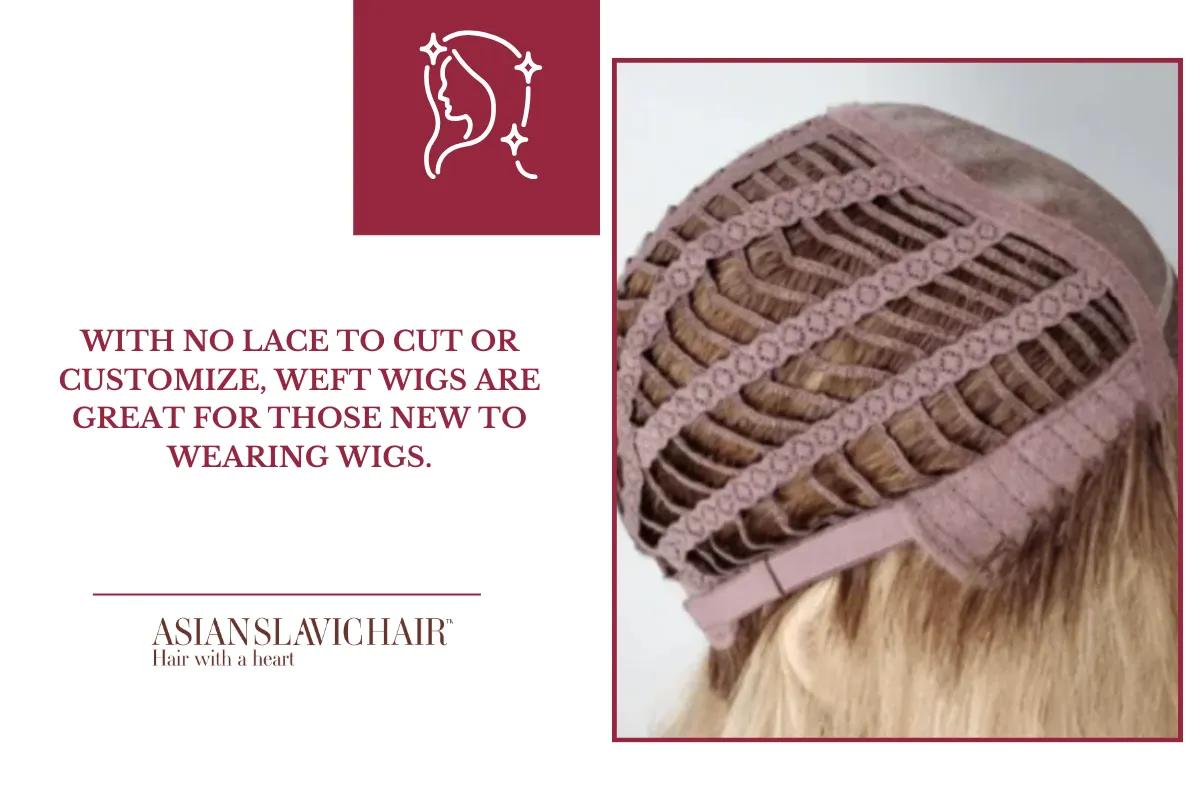
Weft wigs, also known as capless wigs, are constructed by sewing hair wefts onto a breathable cap. These wigs are lightweight and more comfortable than other types, making them ideal for beginners.
With no lace to cut or customize, weft wigs are great for those new to wearing wigs.
Pros:
Lightweight: The open-weft construction allows for better airflow, making the wig feel less heavy on the scalp.
Easy to Wear: With no lace to cut or customize, weft wigs are great for those new to wearing wigs.
Variety: Weft wigs come in numerous styles and colors, providing a wide range of choices.
Cons:
Less Natural: Weft wigs do not look as realistic as lace wigs, making them easier to identify as wigs.
Limited Styling: Styling options are restricted to the wig’s pre-set design.
With so many types of wig caps available, making a choice can feel overwhelming. Here are some factors to consider when selecting a wig cap:
Cost: Weft wigs, headband wigs, and T-Part wigs are generally the most affordable. Lace front, full lace, and 360 lace wigs are pricier but offer better styling options and more natural looks.
Styling Needs: If you need flexibility in styling, go for lace front, 360 lace, or full lace wigs. For simpler styles, a headband or closure wig may suffice.
Application Skill: Beginners may prefer weft wigs, closure wigs, or headband wigs due to their ease of use. Lace wigs, especially full lace or 360 lace, may require more experience to apply correctly.
Conclusion
Understanding the different types of wig caps is key to making an informed decision that aligns with your personal style, budget, and comfort needs. Whether you’re looking for a natural appearance, styling flexibility, or easy maintenance, there’s a wig cap that will meet your requirements. By exploring the options available, you can confidently select the best wig cap to enhance your look and match your lifestyle.
Slavic hair ranking has gained a significant reputation in the beauty and fashion industry for its exceptional quality, texture, and versatility. From its strong...
Asian hair bleaching has become one of the most popular hair transformations worldwide. However, for individuals with Asian hair, the process can be slightly...