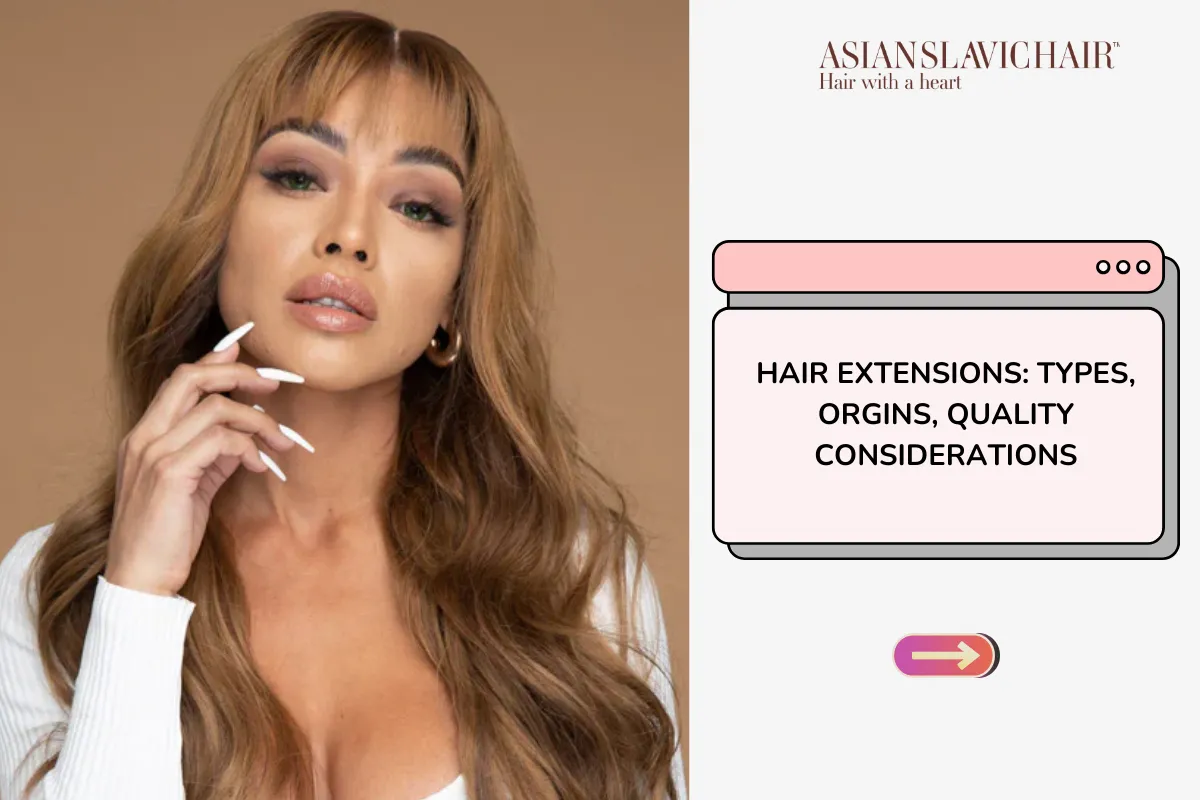


Slavic hair ranking has emerged as one of the most sought-after types of hair in the beauty and fashion industry. Whether it’s for hair...


Hair extensions have transformed the beauty industry, offering versatility, volume, and length without the wait. However, as their popularity has risen, so have concerns about the quality and origins of the hair used. When purchasing extensions, knowing the different types available and understanding the sources can make a substantial difference in both the aesthetic outcome and longevity of the product. In this article, we explore everything you need to know about hair extensions, from the types and benefits to quality factors based on sourcing locations.
Hair extensions come in various forms and styles, catering to diverse needs and preferences. Before diving into the origins, let’s first explore the main types of hair extensions available.
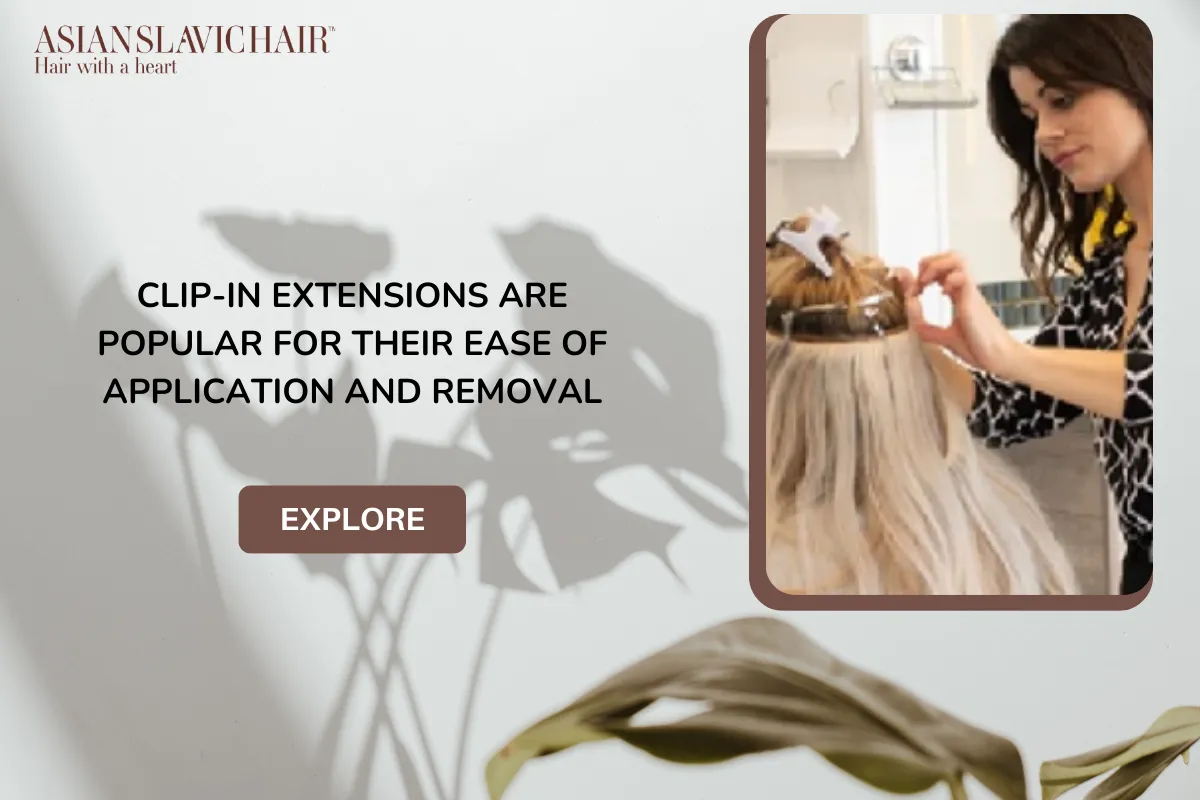
Clip-in extensions are popular for their ease of application and removal, allowing users to add volume and length temporarily without any professional help.
Pros:
Cons:
Tape-in extensions are semi-permanent and involve sections of hair attached using adhesive tapes, lasting around 4-8 weeks.
Pros:
Cons:
Micro-links, also known as micro-beads or micro-ring extensions, are applied strand by strand using small rings to attach each extension.
Pros:
Cons:
Sew-in or weave extensions are braided into natural hair and sewn using a needle and thread, typically used for thicker hair types.
Pros:
Cons:
Read more: Why Slavic Hair for Weaves is the Premium Choice?
The quality and lifespan of hair extensions are often influenced by where the hair is sourced. The most common regions for hair sourcing are Asia, Europe, and North America, each with distinct characteristics and production standards.
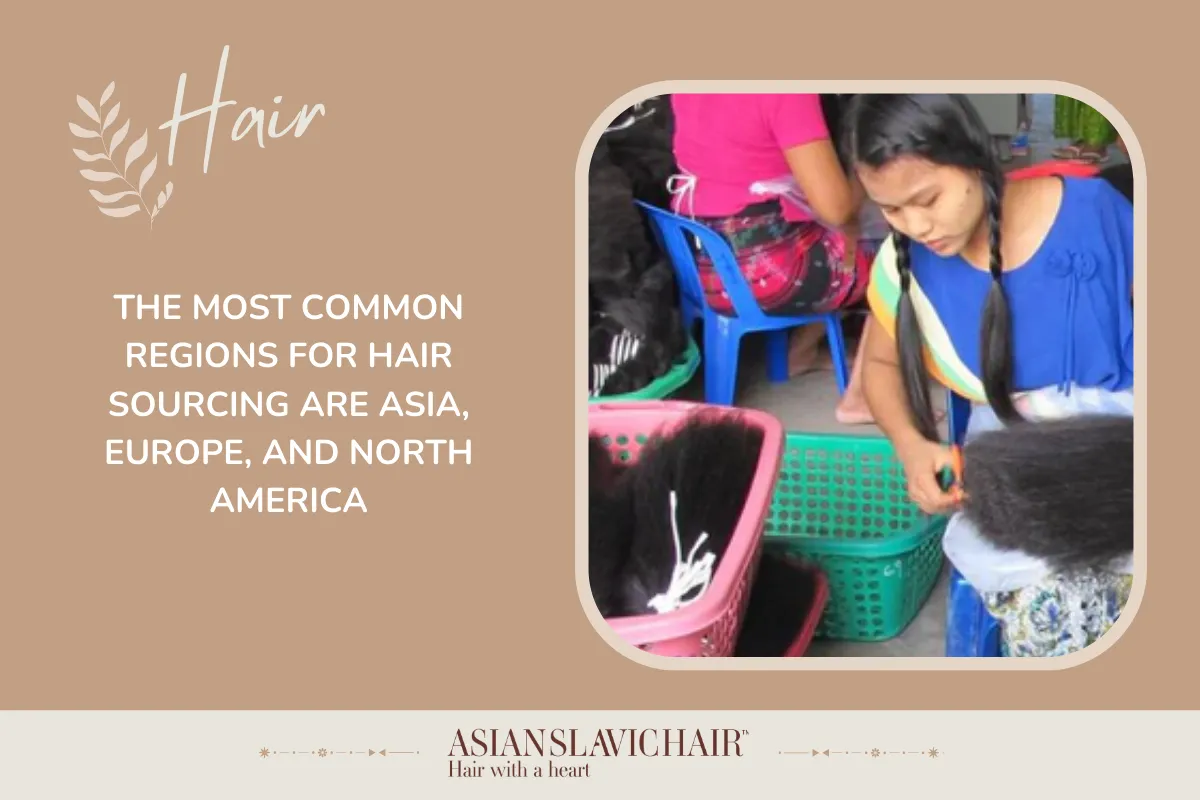
Asian countries, specifically China and India, dominate the hair extension market. This hair type is often darker, coarser, and thicker, making it a popular choice for those seeking a fuller look.
Pros:
Cons:
Considerations for Buyers: Asian hair extensions are budget-friendly but may require more frequent replacement due to reduced durability from chemical processing. Buyers should confirm that hair is a single donor and that cuticles are intact for higher quality.
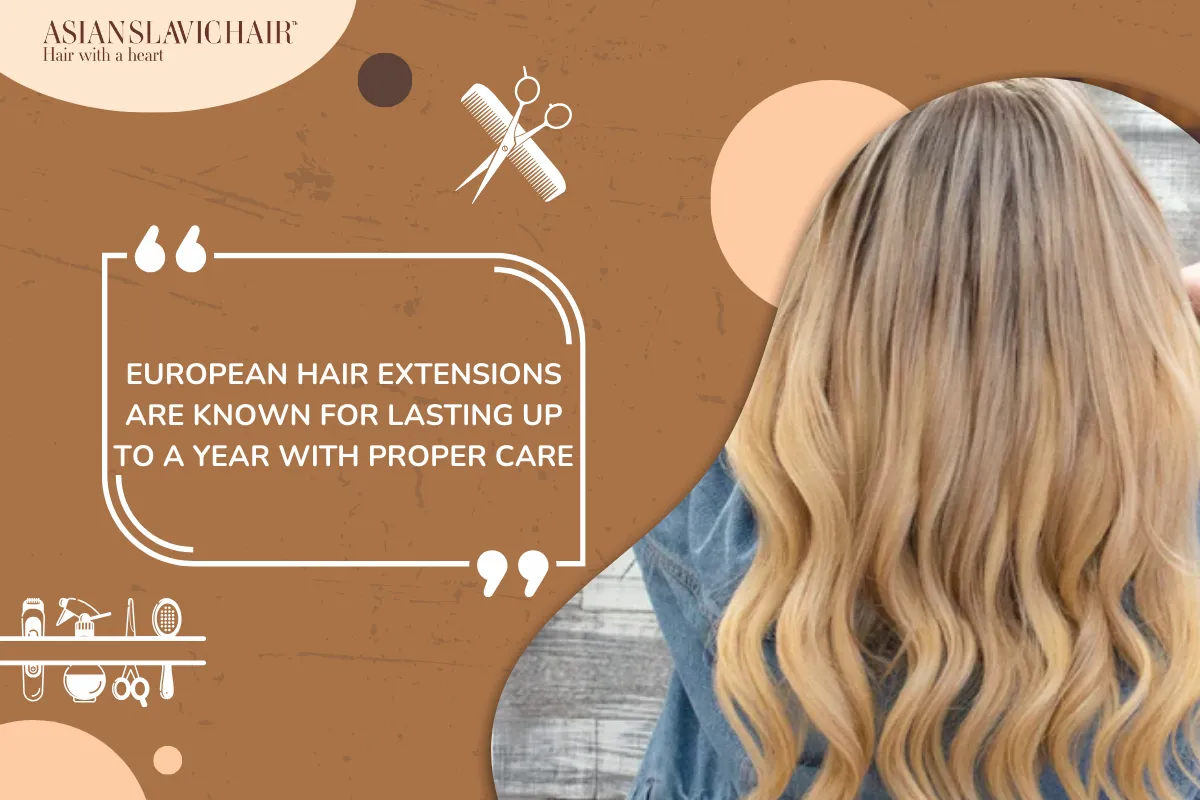
European hair, particularly from Slavic regions, is considered premium due to its natural softness, variety in texture, and minimal need for processing.
Pros:
Cons:
Considerations for Buyers: Those investing in European hair extensions benefit from long-lasting, natural-looking extensions, making it a worthwhile investment despite the higher upfront cost.
Read more: Slavic Hair for Weaves: The Ultimate Guide for Natural Beauty.
When choosing hair extensions, several factors beyond type and origin should be considered, especially as they affect comfort, longevity, and aesthetics.
It’s essential to choose extensions that match your natural hair’s texture for a seamless look. European hair suits finer textures, while Asian hair provides volume for those with thicker or coarser hair.
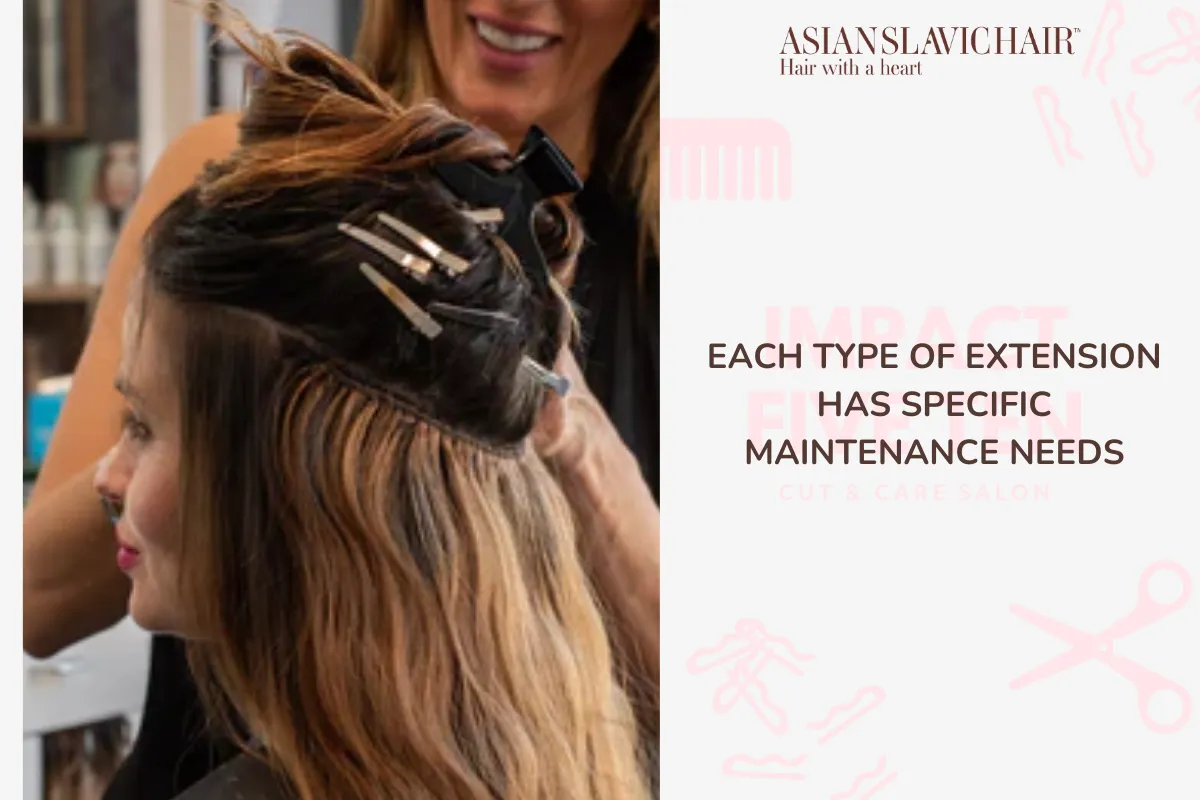
Each type of extension has specific maintenance needs. For example, clip-in extensions require minimal upkeep, while sew-ins may need regular salon visits for upkeep and adjustments.
Ethically sourced hair ensures fair compensation for donors and humane collection practices. Some brands are transparent about their sourcing, allowing consumers to make more informed and ethical choices.
To get the best out of your hair extensions, it’s important to adopt proper maintenance and care routines.
Use sulfate-free shampoos and conditioners to maintain moisture levels and avoid stripping natural oils. Wash your extensions less frequently than your natural hair, about once a week or every two weeks.
Use a gentle, extension-specific brush to detangle without causing breakage. Start from the ends and work up to the roots, avoiding excessive pulling.
Excessive heat can damage both natural and synthetic extensions. Use a heat protectant spray and keep temperatures as low as possible to preserve the hair’s quality.
Professional check-ups are essential, especially for semi-permanent extensions like tape-ins and sew-ins. Regular visits help ensure extensions are securely attached and in good condition.
Choosing the right hair extensions depends on lifestyle, budget, and personal style. Here’s a quick summary to help make an informed decision:
Hair extensions are a fantastic way to achieve a desired look, but it’s essential to invest in quality and to consider factors like origin, type, and maintenance. Knowing the distinctions among different types and sources empowers consumers to make choices that align with their aesthetic goals, budget, and values. Whether opting for affordable Asian extensions or luxurious European hair, the right choice will contribute to a beautiful, long-lasting transformation.
Slavic hair ranking has emerged as one of the most sought-after types of hair in the beauty and fashion industry. Whether it’s for hair...

Slavic hair ranking has gained a significant reputation in the beauty and fashion industry for its exceptional quality, texture, and versatility. From its strong...

Asian hair bleaching has become one of the most popular hair transformations worldwide. However, for individuals with Asian hair, the process can be slightly...