

Virgin Slavic hair is one of the most sought-after types of hair in the beauty industry. Known for its natural texture, durability, and luxurious...


When it comes to the world of hair extensions, wigs, and natural hair comparisons, the debate over which type of hair is better—Slavic or Asian hair characteristics—continues to rise. Both hair types have their own unique qualities, but many professionals and consumers lean toward Slavic hair for various reasons. In this article, we will explore the characteristics of both Slavic and Asian hair and delve into why Slavic hair often takes the lead in popularity and preference.
Before diving into comparisons, it’s essential to first understand what makes Asian hair distinctive. Asian hair is primarily characterized by its thick, straight strands. The cuticle layer of Asian hair tends to be thicker, providing natural protection and sheen. This makes Asian hair a popular choice for wigs, hairpieces, and extensions due to its durability and resilience.
However, Asian hair is not without its challenges. While its thickness makes it sturdy, it can also make the hair less flexible when it comes to styling. People with naturally straight Asian hair often find it more challenging to achieve certain hairstyles or textures without the help of chemical treatments.

Slavic hair, originating from Eastern European countries such as Russia, Ukraine, and Poland, is renowned for its softness, fine texture, and versatility. Unlike Asian hair, which is often naturally straight and thick, Slavic hair can vary from straight to wavy, offering a more natural look when used in hair extensions or wigs.
One of the most sought-after qualities of Slavic hair is its virgin status. Many suppliers source virgin Slavic hair, meaning the hair has never been chemically treated, dyed, or processed. This gives the hair a more natural appearance, superior texture, and a healthier sheen. The fine and soft nature of Slavic hair makes it ideal for blending with a wide range of hair types, which is a significant advantage for women seeking natural-looking extensions or wigs.
One of the key reasons why Slavic hair is considered superior to Asian hair is the texture. Slavic hair is naturally fine, soft, and lightweight, making it easier to style and blend with different types of natural hair. Asian hair, by contrast, is thicker and more rigid, which can make it difficult to achieve a wide range of hairstyles.
Moreover, Slavic hair comes in various natural shades, from light blonde to dark brown, while Asian hair typically only comes in darker shades like black or dark brown. This variation allows for more flexibility in creating a seamless, natural look in hair extensions and wigs.
The beauty industry places a high value on virgin hair—hair that has not been dyed, chemically treated, or processed in any way. Slavic hair is often sold as virgin hair, offering superior quality in terms of texture, shine, and durability. Virgin hair retains its natural cuticles, which are crucial for maintaining healthy hair. The cuticles provide a protective layer that shields the hair from damage, making it easier to style and care for.
In contrast, Asian hair is often processed to achieve different textures and colors. This processing can lead to the weakening of the hair shaft, making it more prone to damage and breakage over time. While virgin Asian hair is available, it is less common than virgin Slavic hair.

Slavic hair’s fine texture makes it much softer and easier to manage than Asian hair. Because of its natural softness, Slavic hair is often considered the gold standard for luxury wigs and extensions. It lays flat against the scalp, blending more seamlessly with natural hair, which is especially important for women who want a realistic and inconspicuous look.
On the other hand, the coarseness and thickness of Asian hair can make it difficult to achieve the same level of softness and manageability. People who prefer a sleek and soft look often find Slavic hair to be more suitable for their needs.
Both Slavic and Asian hair can be long-lasting if well cared for, but Slavic hair tends to last longer due to its natural cuticle protection and finer texture. The intact cuticles allow Slavic hair to retain moisture better, reducing the risk of dryness and breakage. This means that Slavic hair extensions and wigs are likely to last for many months, or even years, with proper care.
Asian hair, while durable due to its thicker strands, can become dry and brittle over time, especially if it has been processed or colored. The thicker cuticle layer can make it more challenging for moisture to penetrate the hair shaft, leading to dryness and frizz.
Slavic hair is easier to style due to its lightweight nature. Whether you’re looking to curl, straighten, or dye your hair, Slavic hair can adapt to different styles without significant damage. This flexibility is one of the reasons why stylists often prefer working with Slavic hair for custom wigs and extensions.
On the other hand, Asian hair can be more resistant to styling. Its natural thickness makes it less flexible when it comes to holding curls or maintaining certain textures. For individuals looking to achieve a wide variety of hairstyles, Slavic hair offers more options.
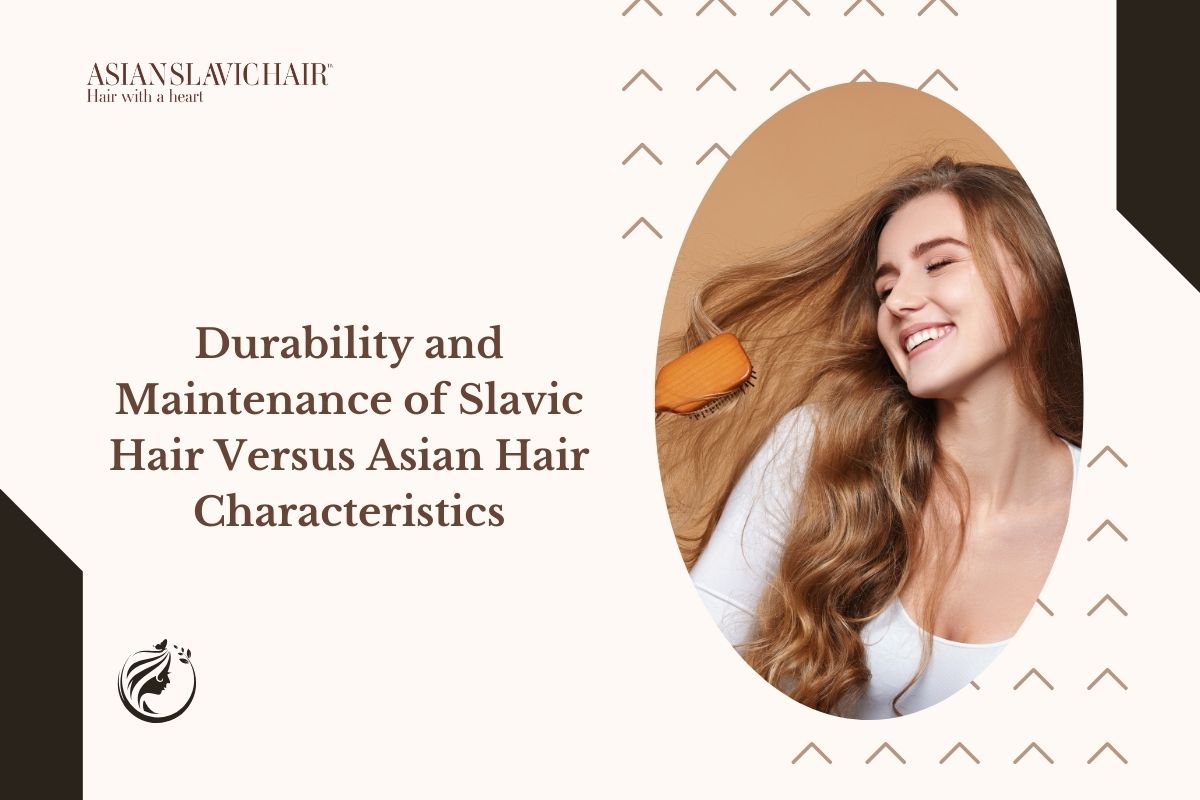
Slavic hair comes in a wide range of natural shades, from platinum blonde to deep brunette. This diversity in color allows for better matching with clients’ natural hair, providing a more cohesive look. The lighter shades of Slavic hair also take well to dyeing, making it a popular choice for people looking to achieve various color transformations without damaging the hair.
Asian hair, in contrast, is usually dark in color—often black or dark brown. While Asian hair can be bleached and dyed, the process can be harsh on the hair, leading to damage and reduced longevity. The natural color of Asian hair limits its adaptability in terms of color transformations.
In the hair extension and wig market, demand often dictates supply. Slavic hair, because of its natural softness, lighter shades, and versatility, commands a higher price and greater demand compared to Asian hair. It is often considered a premium product, particularly for those looking to invest in long-lasting and natural-looking wigs and extensions.
Asian hair, while more affordable, tends to be mass-produced and processed to meet market needs. This processing can affect the overall quality, making it less desirable for high-end consumers who prioritize natural appearance and longevity in their hair products.

Given its virgin quality, natural texture, and color variety, Slavic hair is often priced at a premium. Consumers willing to pay for luxury and quality find that Slavic hair provides a better return on investment in terms of durability and aesthetics. While more expensive upfront, Slavic hair extensions and wigs typically require less frequent replacement due to their long-lasting nature.
Asian hair, while more affordable, may need to be replaced more frequently due to its tendency to become dry and brittle over time, especially if it has been chemically treated or processed. This lower price point makes it more accessible to a broader audience, but the quality and longevity may not be as high as with Slavic hair.
In the debate between Slavic and Asian hair, it becomes clear that while both hair types have their advantages, Slavic hair often emerges as the superior choice for those seeking high-quality, versatile, and long-lasting hair products. Its natural texture, color variety, and virgin quality make it a favorite in the beauty industry, especially among those looking for luxurious and realistic hair extensions or wigs.
Asian hair, while strong and durable, may not offer the same level of flexibility and softness as Slavic hair. For individuals who prioritize a natural look and feel, along with ease of styling, Slavic hair remains the top choice.
Virgin Slavic hair is one of the most sought-after types of hair in the beauty industry. Known for its natural texture, durability, and luxurious...

Virgin Slavic hair has become synonymous with luxury, elegance, and unparalleled quality in the world of high-end fashion and luxury hairpieces. It is the...

Slavic hair extensions have become a cornerstone of the beauty industry, offering unmatched quality, natural appeal, and versatility. For those seeking a seamless and...
