


Slavic hair ranking has emerged as one of the most sought-after types of hair in the beauty and fashion industry. Whether it’s for hair...


Synthetic wigs are a game-changer in the world of hairstyling, offering versatility, affordability, and effortless glamour. Whether you’re exploring new looks or dealing with hair loss, these wigs provide a convenient solution that mimics the appearance of natural hair. To ensure you get the most out of your synthetic wig, it’s crucial to understand their unique features, care routines, and best practices.
Reading more: A comprehensive guide to care for wigs at home.
Synthetic wigs are crafted from man-made fibers designed to replicate the look and feel of human hair. These fibers, often made from materials like Kanekalon or Toyokalon, are pre-styled and retain their shape even after washing, making them low-maintenance and beginner-friendly.
Synthetic wigs are an excellent choice for their affordability, versatility, and vibrant styles. However, shedding is a concern many wig wearers encounter. While some level of shedding is normal, excessive hair loss can compromise the wig’s appearance and lifespan. Understanding the reasons for shedding and adopting proper care practices can help maintain the integrity of your synthetic wig.
Reading more: Slavic Hair Longevity: Secrets to Healthy, Beautiful Hair.
When you first take a synthetic wig out of its packaging, you might notice a few loose strands. These are typically remnants from the production process, where stray fibers may not be securely attached. This shedding usually diminishes after the initial few wears.
Synthetic wigs have a limited lifespan, generally lasting between 3 to 6 months with regular use. Over time, the fibers naturally degrade due to wear and tear, resulting in more noticeable shedding. This is especially true for wigs subjected to frequent styling or improper maintenance.
Using the wrong comb or brushing too vigorously can damage the fibers and dislodge them from the base. Brushing from the roots or using tools not designed for synthetic wigs can worsen this issue, pulling out more strands than necessary.
Synthetic fibers are delicate and require products specifically formulated for their structure. Regular shampoos, conditioners, or styling agents for human hair can weaken the fibers, leading to breakage and shedding.
Not all synthetic wigs are heat-resistant. Applying high temperatures to non-heat-friendly fibers can cause them to melt or snap, resulting in irreversible damage and shedding.
Pulling on the fibers excessively during styling or securing them in tight hairstyles can strain the wig base. This stress loosens the fibers and accelerates shedding.
Preventing shedding is all about proper care and mindful practices. Follow these tips to prolong the life of your wig:
Invest in a wide-tooth comb or a brush designed specifically for synthetic wigs. These tools minimize pulling and tangling while being gentle on the fibers. When detangling, start from the ends and gradually work your way up to avoid unnecessary stress on the wig’s base.
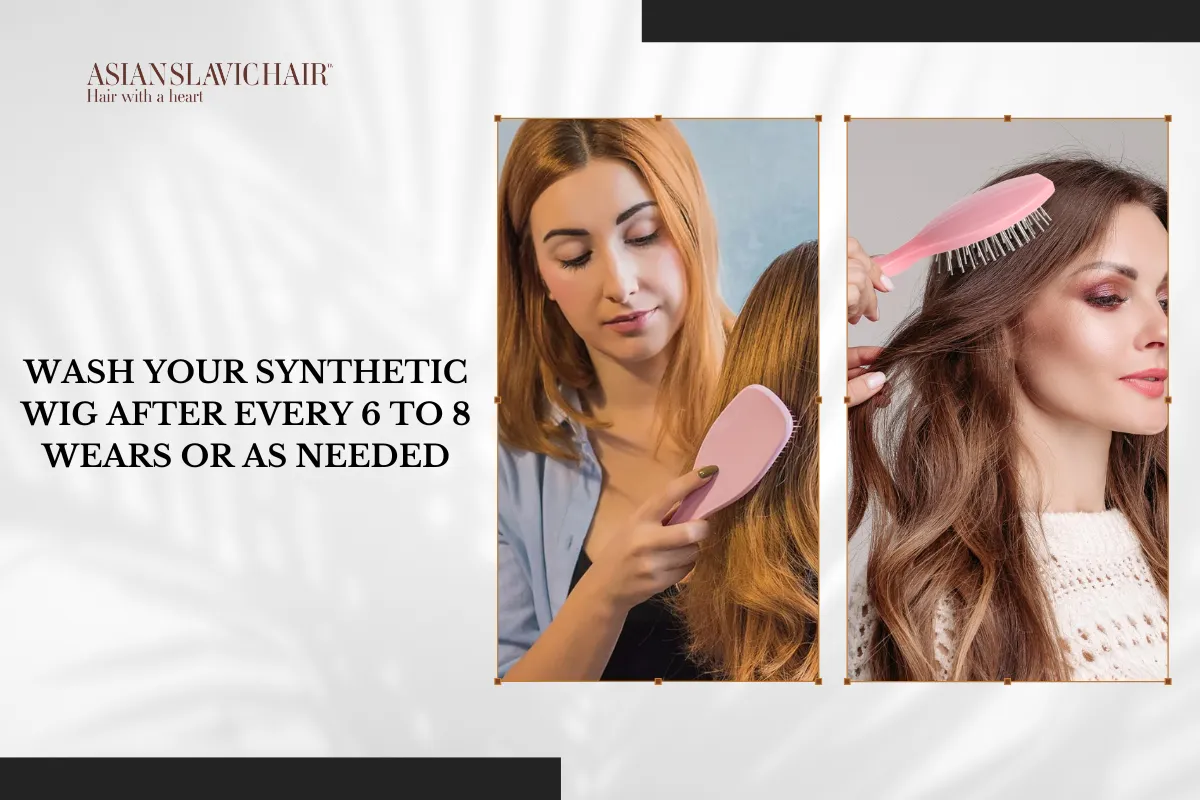
Wash your synthetic wig after every 6 to 8 wears or as needed, using shampoos and conditioners made for synthetic fibers. Avoid soaking the wig, as this can loosen the knots securing the fibers. Instead, gently swish the wig in cool water and rinse thoroughly.
Handle your wig with care when styling. Avoid pulling on the fibers or creating tight hairstyles that strain the cap. For heat-friendly wigs, always use heat tools on low settings (275°F–300°F) and apply a heat protectant spray beforehand to minimize fiber damage.
Store your wig correctly when not in use to maintain its shape and reduce tension on the fibers. Use a mannequin stand, wig head, or its original box to protect it from dust, tangling, and unnecessary stress.
Reading more: Understanding the Slavic Hair Durability: Hair Extensions Ind.ustry
For wigs with hand-tied caps or monofilament sections, applying conditioner near the roots can loosen the knots, leading to shedding. Apply conditioner only to the ends and mid-lengths of the fibers, and rinse gently.
Exposure to UV rays, pollutants, and wind can weaken synthetic fibers. Consider wearing a scarf or hat over your wig in harsh environments to protect it.
Styling synthetic wigs is easier than it seems, thanks to their pre-set nature. However, you can enhance their look with the right techniques:
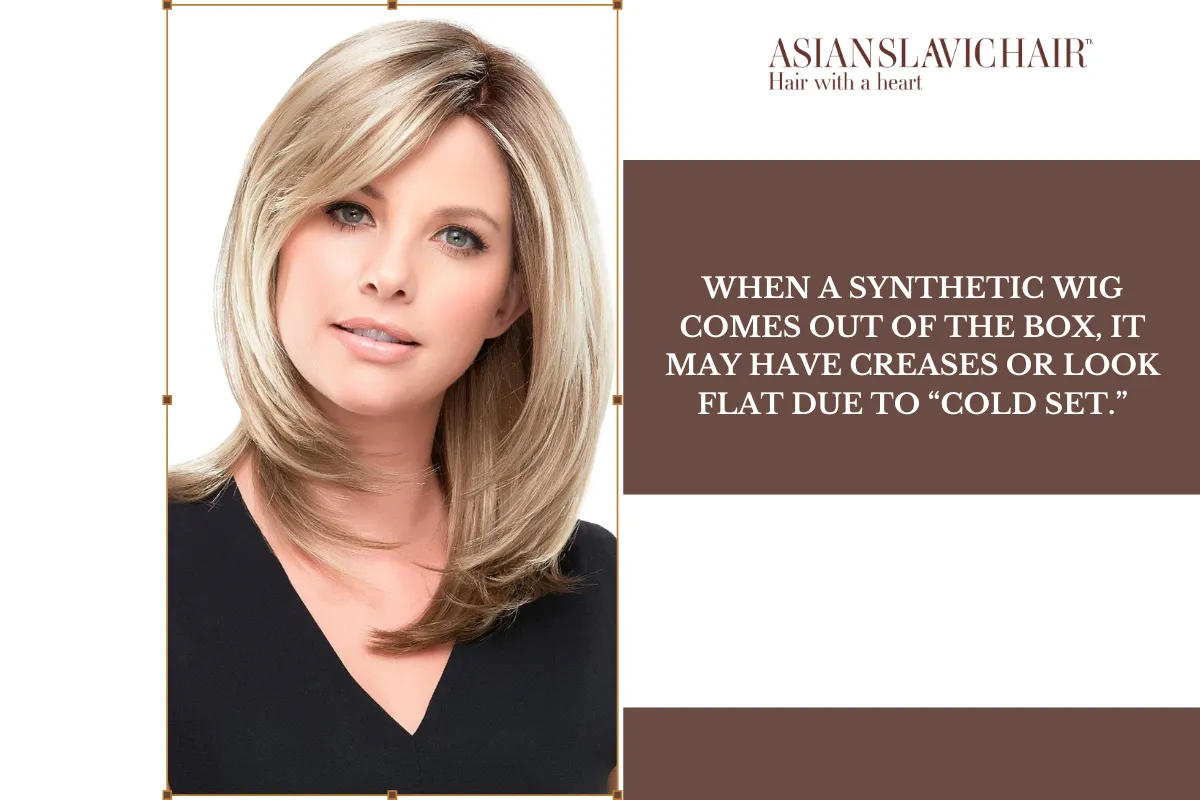
When a synthetic wig comes out of the box, it may have creases or look flat due to “cold set.” Follow these steps to restore its shape:
To add volume, tease the roots gently with a wig comb or your fingers. You can also use lightweight volumizing sprays formulated for synthetic wigs.
Synthetic wigs may appear flat due to packaging. Use the “cold set” removal technique mentioned earlier to fluff and reshape the fibers.
Frizz and tangling are common issues with synthetic wigs, especially at the nape of the neck. Use detangling sprays and regularly comb through the fibers to minimize these problems.
Exposure to direct sunlight can cause synthetic fibers to fade. Store your wig in a cool, shaded place when not in use.
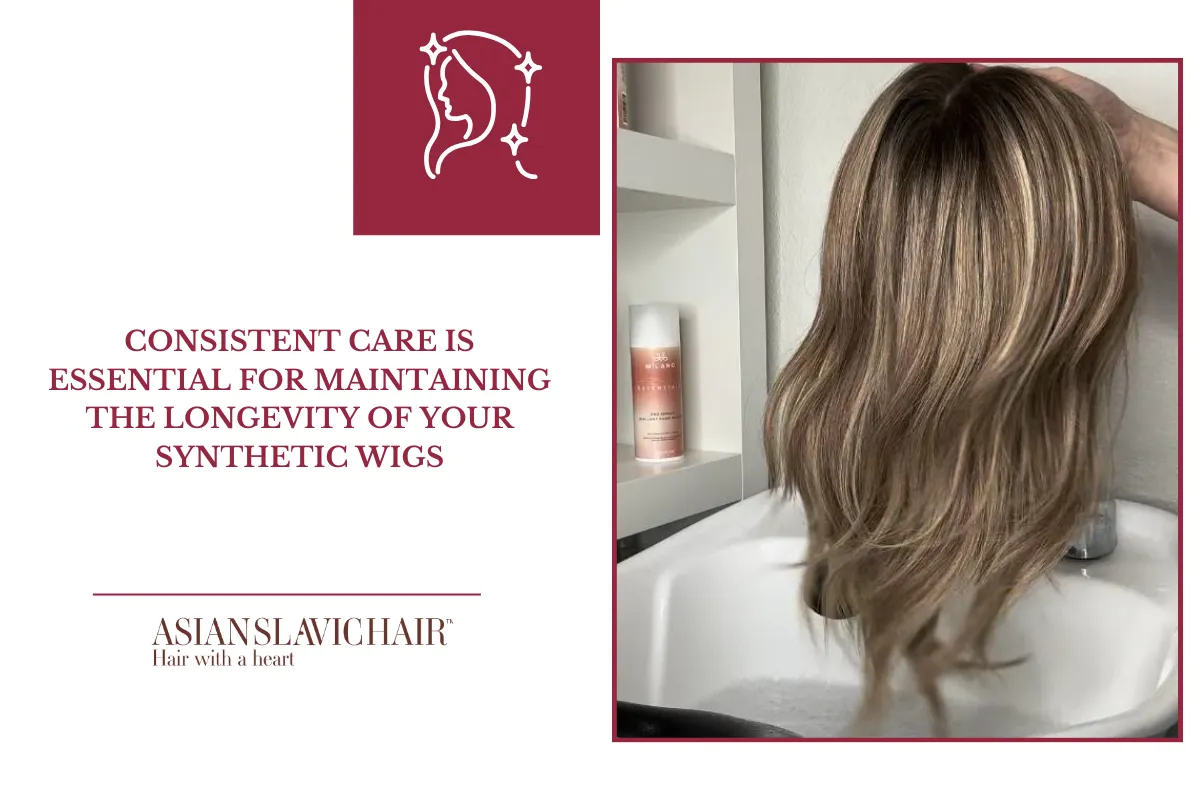
Consistent care is essential for maintaining the longevity of your synthetic wig. Here’s a step-by-step guide:
Synthetic wigs offer a range of advantages for users:
Reading more: Discovering Slavic Hair for Lace Wigs: Why It’s the Best Choice.
Synthetic wigs are an excellent choice for anyone seeking a versatile, affordable, and stylish hair solution. By understanding their unique features, addressing common concerns like shedding, and following proper care and styling techniques, you can enjoy a long-lasting and flawless wig experience. Whether for casual wear, special occasions, or everyday confidence, synthetic wigs continue to be a reliable option for people around the world.
Slavic hair ranking has emerged as one of the most sought-after types of hair in the beauty and fashion industry. Whether it’s for hair...

Slavic hair ranking has gained a significant reputation in the beauty and fashion industry for its exceptional quality, texture, and versatility. From its strong...

Asian hair bleaching has become one of the most popular hair transformations worldwide. However, for individuals with Asian hair, the process can be slightly...