Virgin Slavic hair is celebrated worldwide for its natural beauty, softness, and versatility. But with high demand comes an influx of low-quality fakes. In this comprehensive guide, we’ll dive into what makes Virgin Slavic wigs unique, how to identify authentic strands, the differences from other types of hair extensions, and tips on how to care for this premium material. If you’re looking for high-quality Virgin Slavic wig extensions, this guide will help you make an informed decision.
Virgin Slavic hair is natural human hair from Slavic regions like Russia, Ukraine, and Belarus. It is typically unprocessed, which means it hasn’t been chemically treated or dyed, allowing the hair to maintain its natural structure and color.
A top choice for extensions that blend seamlessly with European and American hair types.
This type of hair is known for its fine texture, softness, and natural luster, which makes it a top choice for extensions that blend seamlessly with European and American hair types.
Why Is Virgin Slavic Hair So Highly Valued?
The popularity of Virgin Slavic wigs comes from several unique qualities:
Natural Look and Feel: This hair has a smooth, soft texture and moderate shine that makes it blend seamlessly with natural hair.
Longevity: When properly maintained, Virgin Slavic wigs extensions can last over a year, offering good value for the investment.
Color Versatility: Virgin Slavic wigs typically come in various shades, from blonde to light brown. Its natural state allows for easy dyeing without significant damage.
Lightweight and Comfortable: Known for being thin and lightweight, Virgin Slavic wigs is comfortable for long-term wear and suitable for fine hair textures.
Authentic Slavic hair is fine to medium in thickness.
Characteristics of Authentic Virgin Slavic Hair
Knowing what to look for in genuine Virgin Slavic hair will help you avoid synthetic or substandard imitations. Here’s how to recognize real Virgin Slavic hair:
Hair Texture and Thickness
Authentic Slavic hair is fine to medium in thickness. It’s neither overly dense nor coarse, unlike many Asian hair types.
It feels soft and elastic to the touch, making it easy to style without heavy products.
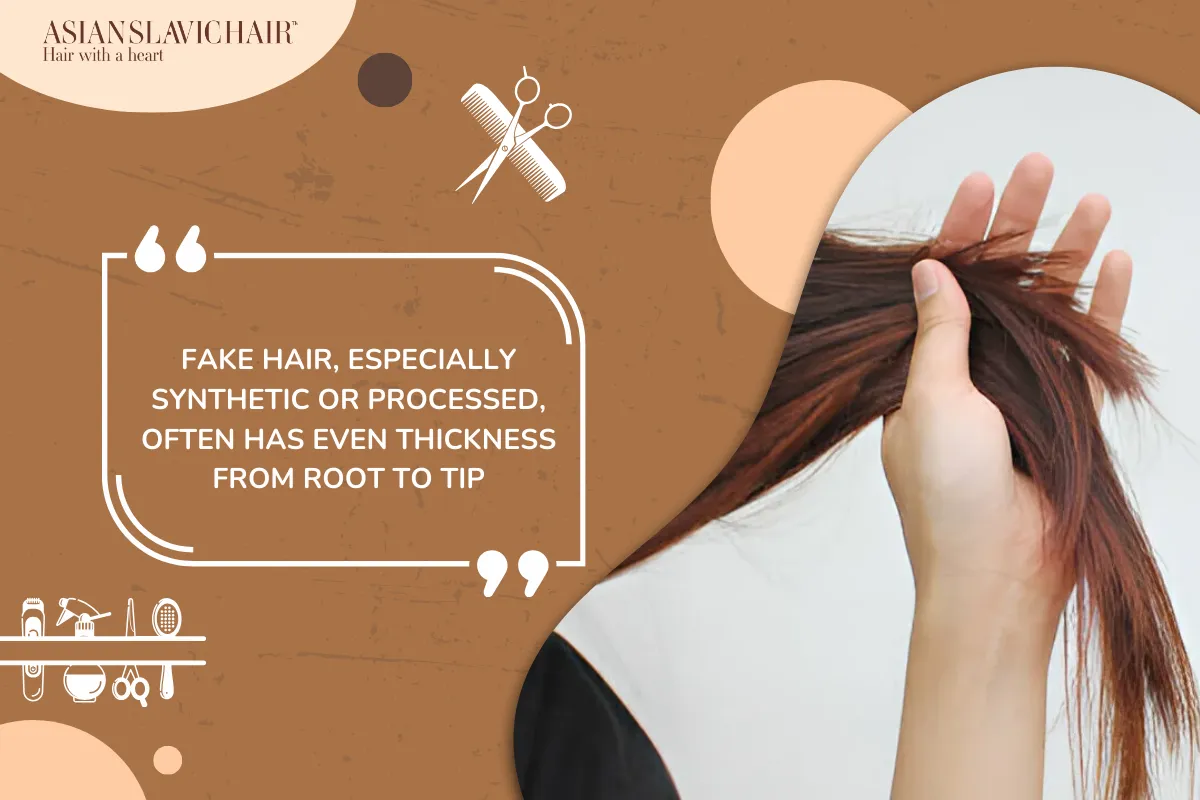
Fake hair, especially synthetic or processed, often has even thickness from root to tip
Color and Tone Variability
Virgin Slavic hair has slight natural color variations, often with subtle undertones, giving it a realistic, multidimensional look.
Extensions made from genuine Virgin Slavic wigs often come in ashy or light brown tones but may also include natural blondes.
Ends and Tips
Authentic Slavic hair has tapered ends due to natural hair growth patterns, making the tips slightly lighter and thinner than the roots.
Fake hair, especially synthetic or processed, often has even thickness from root to tip, giving an unnatural blunt look.
Fake hair often has a silicone coating that can be detected by a slippery or waxy texture.
Texture Consistency
Virgin Slavic wigs has a slight natural wave or straight texture, without excessive shine or silkiness.
Fake hair may have a glossy, silicone-like coating for a “shiny” effect, which fades quickly, revealing a coarse texture.
Packaging and Presentation
Real Virgin Slavic wigs is typically bundled loosely rather than sealed in tight, plastic packaging. This ensures the hair isn’t overly compressed, preserving its natural flow and texture.
How to Differentiate Virgin Slavic Hair from Other Types
Virgin Slavic wigs differ from other popular hair types in several key ways:
Slavic vs. Asian Hair
Texture: Asian hair tends to be naturally thicker and denser, which may make it less compatible with those who have fine hair and prefer a more lightweight feel. In contrast, Virgin Slavic hair is finer and more delicate, blending seamlessly with thinner hair types.
Shine: Shine is another differentiating factor. Due to silicone processing, Asian hair often has an artificial, high gloss. This added shine can make it look slightly less natural, while Slavic hair maintains a moderate, natural luster that closely resembles untreated, healthy hair.
Real Virgin Slavic hair is rarely mass-produced, so be cautious of large retailers offering Slavic hair at low prices.
Color Range: Color also plays an essential role in distinguishing between these two types. Virgin Slavic hair typically comes in a wider range of light shades, from blonde to light brown, offering a versatility in coloring that Asian hair lacks. Asian hair is predominantly dark and may require extensive bleaching to achieve lighter shades, which can lead to damage over time.
Slavic vs. Indian Hair
Density: Indian hair is often denser and has a slightly coarser feel, which can work well for those seeking volume but may not be as ideal for finer, softer styles. Slavic hair, on the other hand, is naturally fine-textured, providing a softer and more flexible look.
Processing: Indian hair is frequently double-drawn, meaning that most strands are trimmed to the same length, giving it a uniform, blunt appearance. By contrast, Slavic hair is typically single-drawn, creating a natural tapering effect with strands of varying lengths, which gives it a more realistic flow and mimics natural hair growth.
Durability: Indian hair often undergoes significant processing to achieve specific colors and textures, which can compromise its longevity. Virgin Slavic hair, on the other hand, is minimally processed, which preserves its strength and structure, resulting in a longer-lasting and more resilient hair extension option.
Tips for Identifying Fake Virgin Slavic Hair
Given the high value of Virgin Slavic extension, the market is flooded with imitations. Here are essential tips to help you verify authenticity:
Look for Natural Variations: Real Slavic hair will have slight inconsistencies in color and texture, which is natural for virgin hair.
Check the Weight and Feel: Virgin Slavic wigs should feel light and flow naturally. Synthetic or highly processed hair tends to be heavier and less flexible.
Test for Silicone Coating: Fake hair often has a silicone coating that can be detected by a slippery or waxy texture. Real Slavic hair lacks this synthetic coating, giving it a matte, natural look.
Check the Ends for Tapering: Authentic Slavic hair has tapered ends that are thinner than the roots. Fake hair, particularly synthetic, usually has blunt and even ends.
Ask for Documentation: Reputable suppliers of Virgin Slavic wigs can usually provide proof of authenticity or source, especially if they import from specific regions.
When it comes to wig extensions, terms like Virgin and Remy hair are often used interchangeably, leading to confusion for many buyers. However, each...